Managing official vehicle fleets often involves limited real-time oversight, manual record-keeping, and difficulty tracking fuel use, maintenance needs, and operational costs. These gaps can reduce efficiency and make data-driven planning more challenging for departments that rely heavily on field mobility.
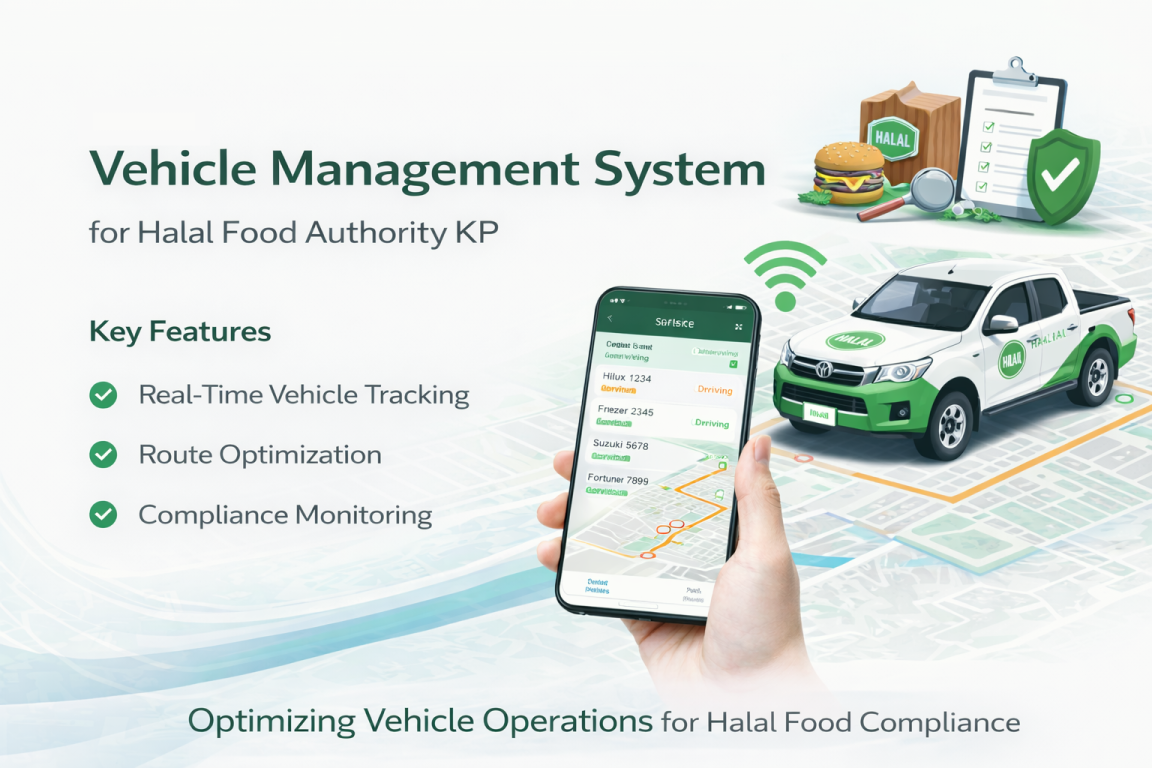
A student team from Iqra National University developed a Vehicle Management System (VMS) designed to support smarter fleet oversight for the Halal Food Authority. The system integrated On-Board Diagnostics (OBD) trackers and IoT devices to capture real-time vehicle data such as fuel level, engine status, and live location. This information was transmitted to a cloud platform and made accessible through web and mobile applications for monitoring and management.
The platform included real-time alerts for vehicle issues (e.g., low fuel or engine faults), expenditure tracking per vehicle, and data analytics to generate reports on performance, fuel efficiency, maintenance history, and overall fleet health. By combining IoT hardware, cloud computing, and user-facing dashboards, the system provided a foundation for more transparent, efficient, and data-informed vehicle operations.
The solution demonstrated strong potential to help the department improve fleet visibility, streamline monitoring, and support better planning and cost management.